
Objectives:
– Students will use observations to describe patterns of what plants and animals (including humans) need to survive.
What Do Animals Need to Survive?

We watched a video titled “Hummingbirds Feeding on Flowers and Flying in Slow Motion.” Then we discussed our observations. We used the See, Think, Wonder strategy to discuss the video.
Discussion questions:
- What are the hummingbirds doing to survive?
- What do you think would happen if the hummingbirds had no flowers to go to?
- Why do you think flowers are important for hummingbirds?
- Do you think the flower will be able to keep growing after the hummingbird visits it? Why or why not?

I asked the big question:
Do plants and animals need the exact same things to survive?
Exploration

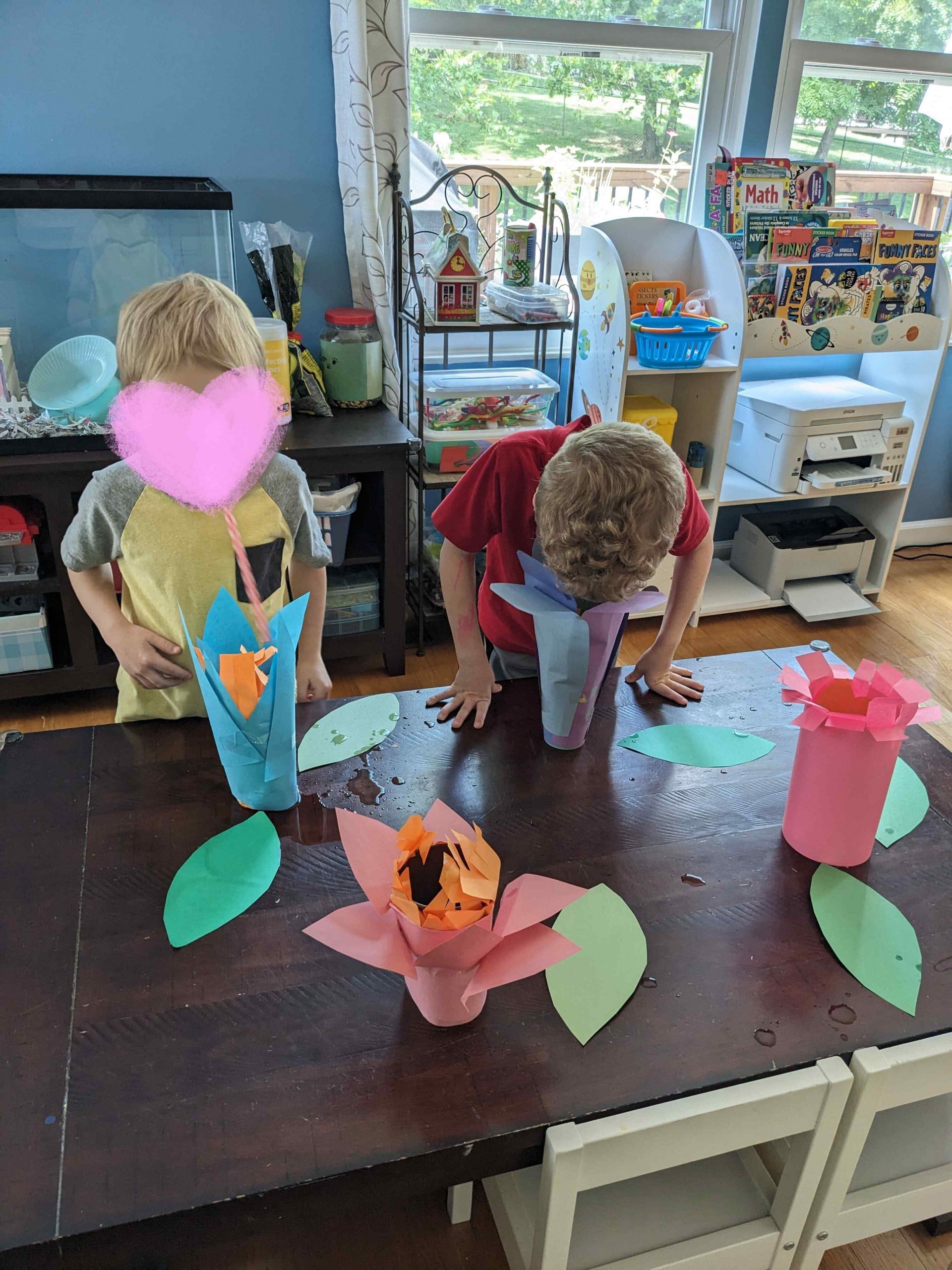
We began by exploring a garden made of paper flowers and cups of nectar (flavored water). I asked, “Why do you think the hummingbird might like this flower?” We recalled how flowers provide nectar, a sweet liquid that hummingbirds drink for energy. The kids pretended to be a hummingbird by using a straw to “feed” from the flower, helping them understand how the hummingbird collects food.
Open Discussion
We identified which flowers would be easier for a hummingbird to feed from. Flowers with an open tube going straight down were the easiest to drink from. Flowers with lots of tiny openings were difficult to drink from.
• Was it easy or hard to get the nectar from the flower?
• Why do you think the hummingbird’s beak is shaped the way it is?
• What do you think would happen if there were no flowers for the hummingbirds to feed on?
• Why do you think hummingbirds might visit brightly colored flowers?

We then examined real flowers from the garden and discussed which flowers a hummingbird might prefer.
Observation
We read the book, The Little Hummingbird by Michael Nicoll Yahgulanaas.
We discussed the book:
- Where does the hummingbird live?
- In the story, what problem were the animals faced with?
- Why would this problem be so scary for all the animals?
- Where do you think the hummingbird goes when it needs to rest or sleep?”
- Why do you think a hummingbird might choose to hide its nest in a tree or bush?
I explained that while hummingbirds get water from nectar, they also use water for other purposes. They also need water to take baths and clean themselves. Sticky drops of nectar can get on their beaks and feathers. Staying clean helps them stay healthy. I showed some pictures and videos of places where birds, including hummingbirds, might get water such as shallow puddles, birdbaths, or leaves with dew.
I showed videos and pictures of other animals drinking water, such as a dog lapping, a bird scooping with its beak, and a human sipping. I asked, “What do all these animals, including hummingbirds, have in common when it comes to water?” I helped the kids connect their observations to the idea that all animals, no matter how different they are, need water to survive. We watched the video, Nature: Hummingbird nest and used the See, Think, Wonder strategy to discuss.
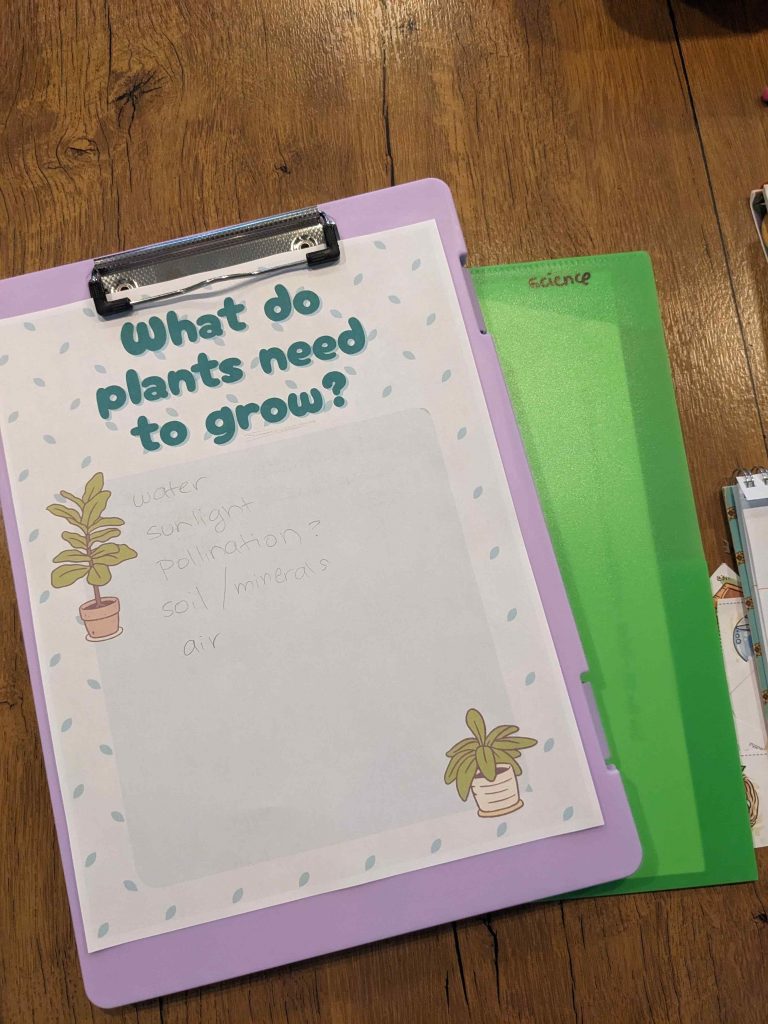
We watched a video of a plant time-lapse and discussed using the STW strategy. I asked, “what do you think plants need to grow?” and we discussed.

We read From Seed to Plant by Gail Gibbons.

We continue adding to our initial ideas based on the book and wrote them down.
Experiment
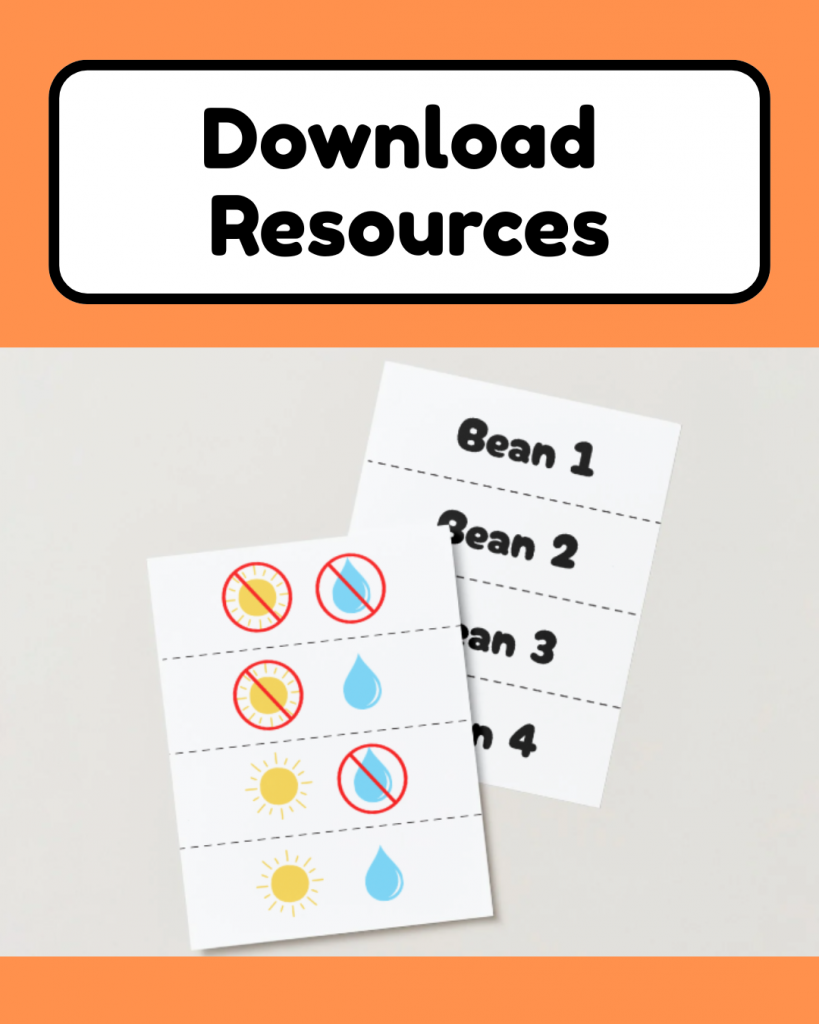
I prepared lima beans in 4 different baggies on a piece of paper towel. I put these baggies in four different conditions: dark with no water, dark with water, light with no water, and light with water.

We set up stations for each of the plants and made observations daily, answering questions like: what is different between the plants, do the plants look healthy, how tall are they, or how do their leaves look?


(Bonus science experiment! A spider moved into the window where the beans are hanging. We shall observe it as well.)
We labeled the beans to make things easier. I created a chart divided into four sections to organize and record observations. We recorded our observations once per week rather than daily, since plants can take quite a while to grow. The boys did observe them every day though, always checking on the bean that started growing first and excitedly noticing that the roots seemed longer today.
• Plant in Dark Place and Dry: Bean 1
• Plant in Dark Place and Water: Bean 2
• Plant in Light Place and Dry: Bean 3
• Plant in Light Place and Water: Bean 4
After 4 weeks is up, we will discuss together to identify patterns in the results.
Discussion questions:
• What patterns do you notice between the plants that are in the dark?
• What patterns do you notice between the plants that are in the light?
• What does this tell us about what plants need to survive?
• What patterns do you notice between the plants that are dry?
• What pattern do you notice between the plants that received water?
• What does this tell us about what plants need to survive?
• What evidence supports your claim?
So, what do plants need based on the evidence?
We will update our scientific method chart to reflect our findings and draw a conclusion.

Leave a Reply